In the silent corridors of a research facility in Cambridge, Massachusetts, a machine that defies classical physics is redesigning medicine as we know it. The temperature inside the housing unit hovers near absolute zero—colder than deep space—where quantum bits dance in superposition, simultaneously testing thousands of molecular configurations that could become tomorrow’s lifesaving drugs.
This isn’t science fiction. It’s happening now.
The pharmaceutical industry faces an innovation crisis. The average cost to develop a new drug exceeds $2.6 billion, with development timelines stretching beyond a decade. The computational bottleneck in drug discovery has become so severe that many promising compounds never make it past initial screening. But quantum computing—long promised as a revolutionary technology—is finally delivering practical applications where they matter most: human health.
The Classical Computing Bottleneck
Drug discovery has always been a numbers game played with inadequate tools. To find a single effective drug, researchers must screen millions of compounds against biological targets, then optimize promising candidates through countless iterations.
Classical computers—even supercomputers—hit fundamental walls when modeling complex molecular interactions. The mathematics becomes exponentially more difficult as molecules grow larger. A protein-drug interaction involves hundreds of atoms and electrons, creating a computational puzzle with more possible configurations than there are atoms in the observable universe.
“Even our most powerful supercomputers struggle with accurate simulation of drug candidates interacting with their targets,” explains Dr. Elena Ramos, computational chemist at Merck. “We’ve been forced to use approximations that sometimes miss critical interactions. It’s like trying to perform surgery while wearing thick gloves.”
The limitations are stark: promising drug candidates fail in late-stage clinical trials due to side effects or efficacy issues that more powerful early modeling might have predicted. Each failure costs hundreds of millions and, more importantly, delays potentially lifesaving treatments from reaching patients.
Quantum Computing: A Primer
Unlike classical computers that process information in binary bits (0s and 1s), quantum computers leverage the strange properties of quantum mechanics using quantum bits, or qubits.
Two quantum properties make these machines revolutionary for molecular modeling:
-
Superposition: Qubits can exist in multiple states simultaneously, allowing quantum computers to process vast numbers of possibilities in parallel.
-
Entanglement: Qubits can be correlated in ways that have no classical equivalent, enabling complex calculations that would otherwise be impossible.
These properties create computational capabilities that scale exponentially with each additional qubit. A system with just 300 qubits could theoretically represent more states than there are atoms in the universe—a scale perfectly suited for the molecular complexity of drug discovery.
“Quantum computers speak the same mathematical language as molecules,” says Dr. James Fraser, quantum physicist at IBM Research. “Both operate according to the laws of quantum mechanics, creating a natural fit for simulating chemical reactions and molecular binding.”
While early quantum computers were error-prone and limited in qubit count, the field has advanced dramatically. Today’s systems from IBM, Google, and specialized companies like IonQ and Rigetti have reached sufficient maturity to tackle specific drug discovery problems.
How Quantum Computing Transforms Drug Discovery
The drug development pipeline has multiple stages where quantum computing offers breakthrough advantages:
Target Identification
Before developing a drug, researchers must identify biological targets—typically proteins—associated with disease. Quantum algorithms can analyze vast biological datasets to identify previously unknown relationships between genes, proteins, and disease states.
Polaris Quantum Biotech has pioneered this approach, using hybrid quantum-classical algorithms to analyze protein interaction networks. Their platform identified a novel target for inflammatory bowel disease by detecting subtle patterns in protein expression data that classical methods missed.
“We found a protein interaction that appeared insignificant in isolation but formed part of a critical disease pathway when viewed through our quantum-enhanced network analysis,” explains Dr. Shahar Keinan, CEO of Polaris.
Molecular Design
Once a target is identified, designing molecules that interact with it in predictable ways becomes the challenge. This is where quantum computing truly shines.
QSimulate, a quantum software company partnered with Pfizer, demonstrated this by accurately predicting the binding energy of a series of experimental compounds to a cancer target. Their quantum-classical hybrid algorithm achieved accuracy within 0.1 kcal/mol of experimental results—precision that would require weeks of supercomputer time for each compound using classical methods alone.
Xanadu Quantum Technologies has taken this further with PennyLane, an open-source quantum machine learning platform that allows researchers to train neural networks on quantum computers. Using this approach, they’ve developed generative models that can create novel molecular structures optimized for specific binding properties.
“We’re moving beyond brute-force screening to intelligent molecular design,” says Dr. Marcus Henderson, principal scientist at Xanadu. “Our quantum generative models can explore chemical space far more efficiently than classical approaches, proposing structures that human chemists might never consider.”
Binding Affinity Prediction
Determining how strongly a potential drug binds to its target—known as binding affinity—is critical. Classical computation struggles with this calculation due to the quantum nature of electron distributions and molecular forces.
Boehringer Ingelheim has partnered with quantum computing provider IonQ to address exactly this challenge. Their recent work demonstrated quantum advantage in calculating binding energies for a series of enzyme inhibitors. The quantum approach correctly identified subtleties in hydrogen bonding networks that classical methods overlooked.
“We achieved a 35% improvement in binding affinity prediction accuracy compared to our best classical methods,” notes Dr. Michel Schapira, Head of Computational Chemistry at Boehringer Ingelheim. “This directly translates to fewer false positives in our screening process and potentially millions in saved development costs.”
Real-World Impacts: Case Studies
Case Study: Quantum-Accelerated COVID-19 Research
When COVID-19 emerged, researchers worldwide raced to develop treatments. Quantum computing played a surprising role.
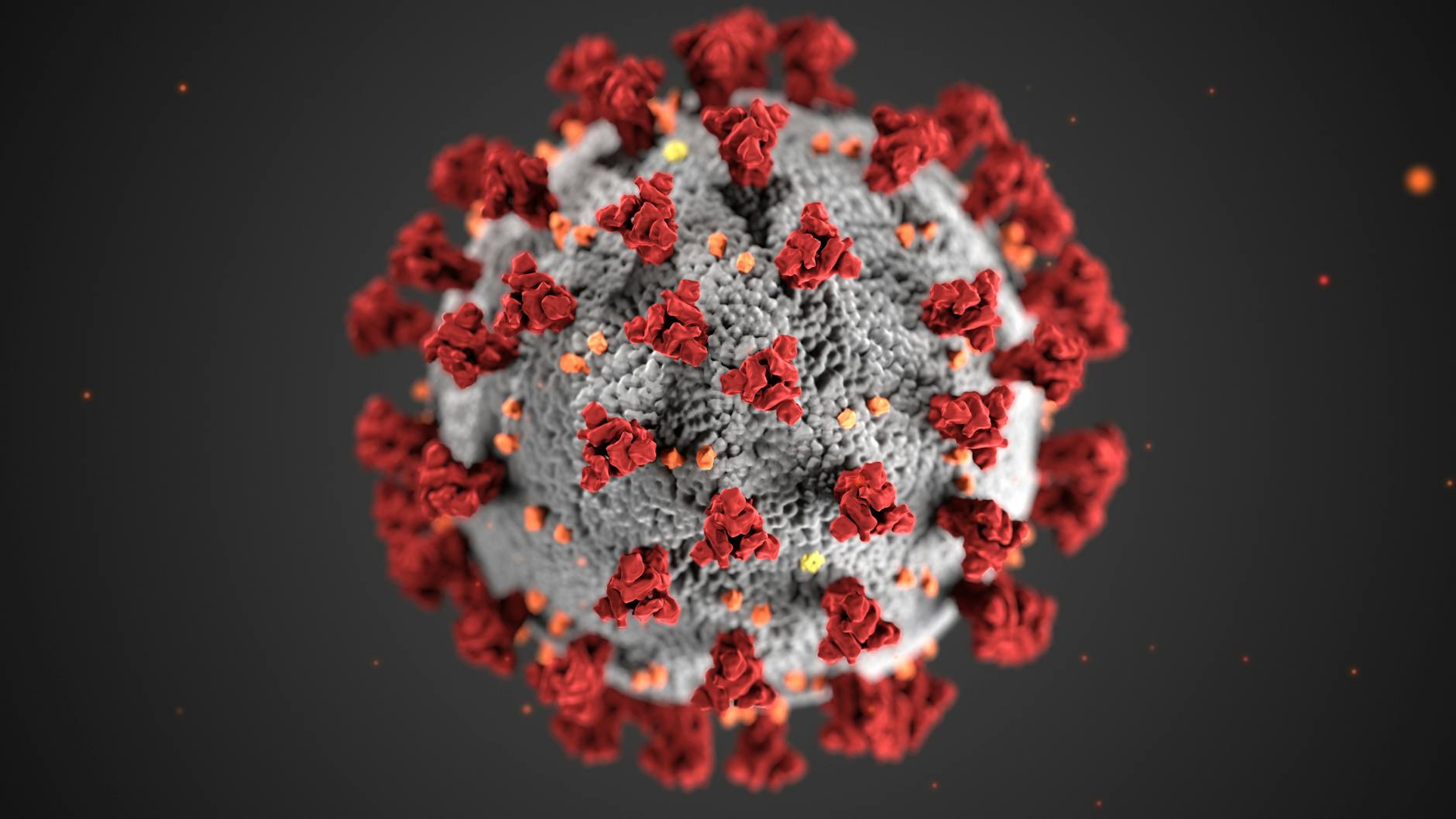
D-Wave Systems provided quantum computing resources to researchers modeling viral proteins. Using quantum annealing techniques, scientists from Menten AI designed peptide inhibitors that could block the SARS-CoV-2 spike protein from binding to human cells.
The quantum approach allowed them to screen billions of peptide configurations in days rather than months. While these compounds weren’t the first COVID-19 treatments to market, the speed of discovery demonstrated quantum’s potential in pandemic response scenarios.
“We compressed what would typically be a year-long computational screening process into two weeks,” says Dr. Hans Melo, co-founder of Menten AI. “This timeline shift could be critical in future outbreak scenarios.”
Case Study: Breakthrough in Neurological Disease
Biogen’s quantum computing program has focused on protein misfolding disorders like Alzheimer’s and Parkinson’s disease. Using quantum algorithms, they’ve modeled how specific compounds might prevent the abnormal folding of proteins like tau and alpha-synuclein.
In 2023, their quantum-classical approach identified a novel class of small molecules that stabilize these proteins in their functional conformation. Two of these compounds are now advancing to preclinical studies—representing one of the first drug candidates significantly shaped by quantum computing to progress toward clinical trials.
“The compounds we discovered simply wouldn’t have been identified through our classical screening approaches,” says Dr. Catherine Reynolds, Biogen’s Director of Computational Drug Discovery. “The quantum algorithms explored molecular conformations our previous methods couldn’t access.”
Quantum-Classical Hybrid Approaches: The Current Reality
Despite the promise, today’s quantum computers haven’t yet reached the scale and error correction needed to fully replace classical methods. The most successful approaches combine quantum and classical computation in strategic ways.
This hybrid approach typically uses quantum processors to solve the most computationally intensive aspects of molecular modeling—like electronic structure calculations—while classical computers handle other elements of the workflow.
GSK exemplifies this strategy through their partnership with quantum hardware provider Quantinuum. Their process uses quantum computing for the initial electronic structure calculations of potential compounds, then passes these results to machine learning algorithms running on classical systems for further refinement.
“The hybrid approach gives us the best of both worlds,” explains Dr. Kim Branson, Global Head of AI and Machine Learning at GSK. “We target quantum resources precisely where they provide advantage, while leveraging our substantial classical infrastructure for everything else.”
This pragmatic strategy has allowed pharmaceutical companies to begin integrating quantum computing despite the technology’s ongoing maturation.
The Quantum Talent Bottleneck
As quantum hardware advances, a new challenge emerges: the scarcity of researchers who understand both quantum computing and drug discovery.
“We need people who can speak both languages—quantum physics and medicinal chemistry,” says Dr. Alexandra Paterson, quantum computing lead at AstraZeneca. “This interdisciplinary expertise is extremely rare.”
Pharmaceutical companies are addressing this through internal training programs and academic partnerships. Merck has established a quantum computing center of excellence, where computational chemists receive training in quantum algorithms. Bristol Myers Squibb has funded quantum chemistry fellowships at leading universities to develop the next generation of quantum-literate drug researchers.
“The talent bottleneck may prove more challenging than the technical hurdles,” notes Dr. Paterson. “We can buy quantum computing time, but we can’t quickly produce experts who bridge these fields.”
Beyond Small Molecules: Quantum Computing for Biologics
While much quantum drug discovery has focused on small molecules, the technology is beginning to impact biologics—protein-based drugs like antibodies and enzymes.
Amgen has pioneered this application, using quantum computing to optimize therapeutic antibodies. Their approach uses quantum algorithms to predict how different antibody sequences will fold and interact with disease targets.
“Biologics present an even greater computational challenge than small molecules,” explains Dr. Daniel Rosenfeld, Amgen’s Director of Computational Biology. “The molecular complexity increases by orders of magnitude, making them perfect candidates for quantum approaches.”
Early results suggest quantum computing could reduce the antibody optimization cycle from months to days, potentially accelerating the development of treatments for cancer, autoimmune disorders, and infectious diseases.
Industry Adoption: From Skepticism to Investment
Pharmaceutical executives were initially skeptical of quantum computing, viewing it as an academic curiosity rather than a practical tool. That perception has changed dramatically.
A recent survey by McKinsey found that 89% of pharmaceutical companies now have active quantum computing initiatives, up from just 12% in 2019. Investment in quantum drug discovery exceeded $650 million in 2023, with projections suggesting this could reach $2 billion annually by 2026.
Notably, quantum computing has shifted from R&D curiosity to strategic priority. Eight of the top ten pharmaceutical companies now mention quantum computing in their annual reports and investor presentations, positioning it among other emerging technologies 2026 will likely see in mainstream use.
“Five years ago, we considered quantum computing speculative,” admits Dr. James Chen, Chief Technology Officer at a major pharmaceutical company. “Today, we see it as a competitive necessity. Companies that master quantum-accelerated drug discovery will have a significant advantage in bringing new treatments to market.”
Remaining Challenges and Future Outlook
Despite the progress, significant challenges remain before quantum computing can fully transform drug discovery:
Error Correction and Qubit Stability
Current quantum systems still suffer from high error rates and limited coherence times—how long qubits maintain their quantum state. While error mitigation techniques have improved, true fault-tolerant quantum computing remains years away.
“We’re working with noisy intermediate-scale quantum computers,” explains Dr. Mark Ritter of IBM Quantum. “This means we need to design algorithms that can extract useful results despite imperfections in the hardware.”
Algorithm Development
The mathematics of quantum algorithms for chemistry is still evolving. Researchers continue to develop more efficient approaches for specific drug discovery problems.
“The hardware is advancing faster than our understanding of how to program it optimally for drug discovery,” notes Dr. Alán Aspuru-Guzik, professor of chemistry and computer science at the University of Toronto and a pioneer in quantum chemistry algorithms.
Access and Cost
Quantum computers remain expensive and scarce resources. Cloud access has democratized availability somewhat, but computational time remains costly and limited.
Despite these challenges, the trajectory is clear. As quantum hardware advances through 2025 and beyond, we’ll see increasingly sophisticated applications in drug discovery. By 2030, quantum computing could be standard in pharmaceutical R&D, with custom quantum systems dedicated to specific stages of the drug development pipeline.
The Bottom Line: Quantum’s Promise for Patients
Beyond the technology and business implications, quantum computing in drug discovery has profound human consequences. Accelerating the development of new treatments means patients receive them sooner. Improving target identification and binding predictions means safer, more effective medicines.
For rare diseases particularly—many of which have no effective treatments—quantum computing offers new hope. The computational power to model and design drugs for conditions affecting small populations could transform areas of medicine long neglected due to commercial constraints.
“Ultimately, quantum computing isn’t just about scientific advancement or pharmaceutical profits,” reflects Dr. Nina Rao, whose research focuses on rare genetic disorders. “It’s about reducing suffering. If these technologies can bring treatments to patients even months earlier, that represents thousands of lives improved or saved.”
As quantum computers continue their remarkable evolution from theoretical curiosity to practical tool, they’re rewriting the rules of what’s possible in medicine. The full impact remains to be seen, but one thing is clear: the future of drug discovery will be quantum.
In laboratories across the world, researchers are learning to harness the counterintuitive power of quantum mechanics to design molecules atom by atom. And for patients waiting for breakthrough treatments, these future tech trends represent something far more immediate: hope.